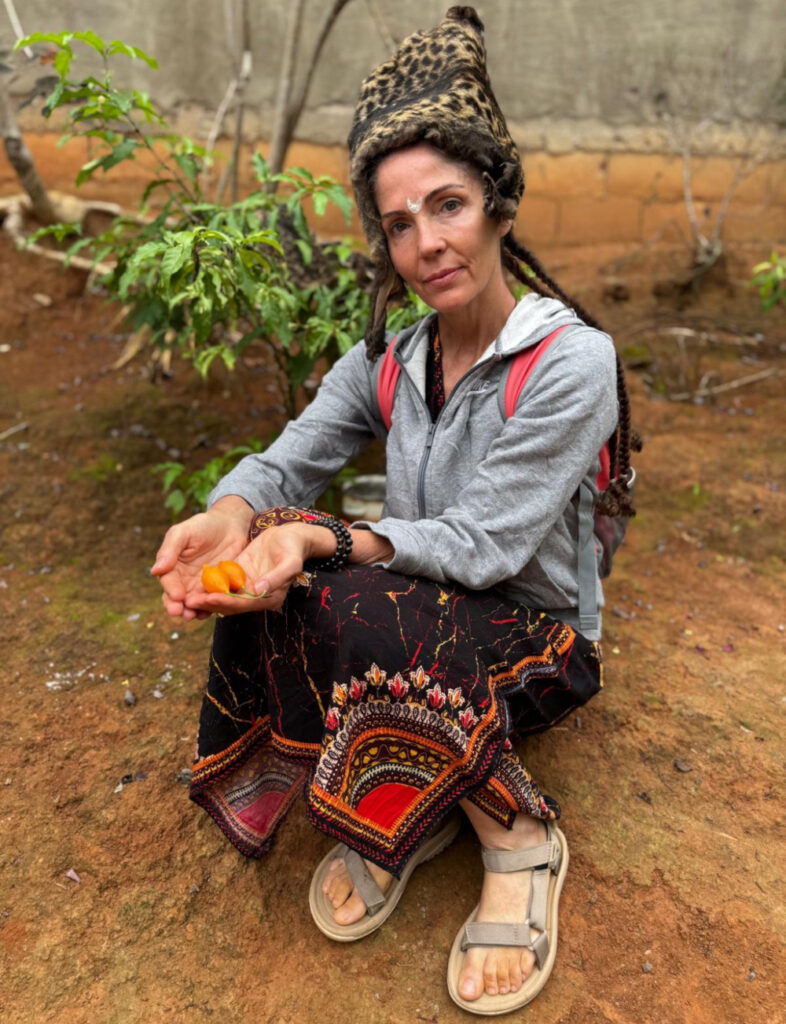
The plant, the root bark and the lineage
behind every Iboga Journey ceremony.
Iboga (Tabernanthe Iboga) is a perennial rainforest shrub native to Central West Africa. Its yellow roots contain indole alkaloids, concentrated most heavily in the root bark, which is the part used as medicine. For thousands of years Iboga has been known to the forest peoples of the Congo Basin, and for centuries it has sat at the core of Bwiti, a spiritual path practised in Gabon, Cameroon and the Congo. In the West Ibogaine is best known for interrupting drug withdrawal. At Iboga Journey in Alberta, whole, dried root bark is used instead as a medicine for exposing egoic and unconscious patterns: an inner rite of passage to the core of being.
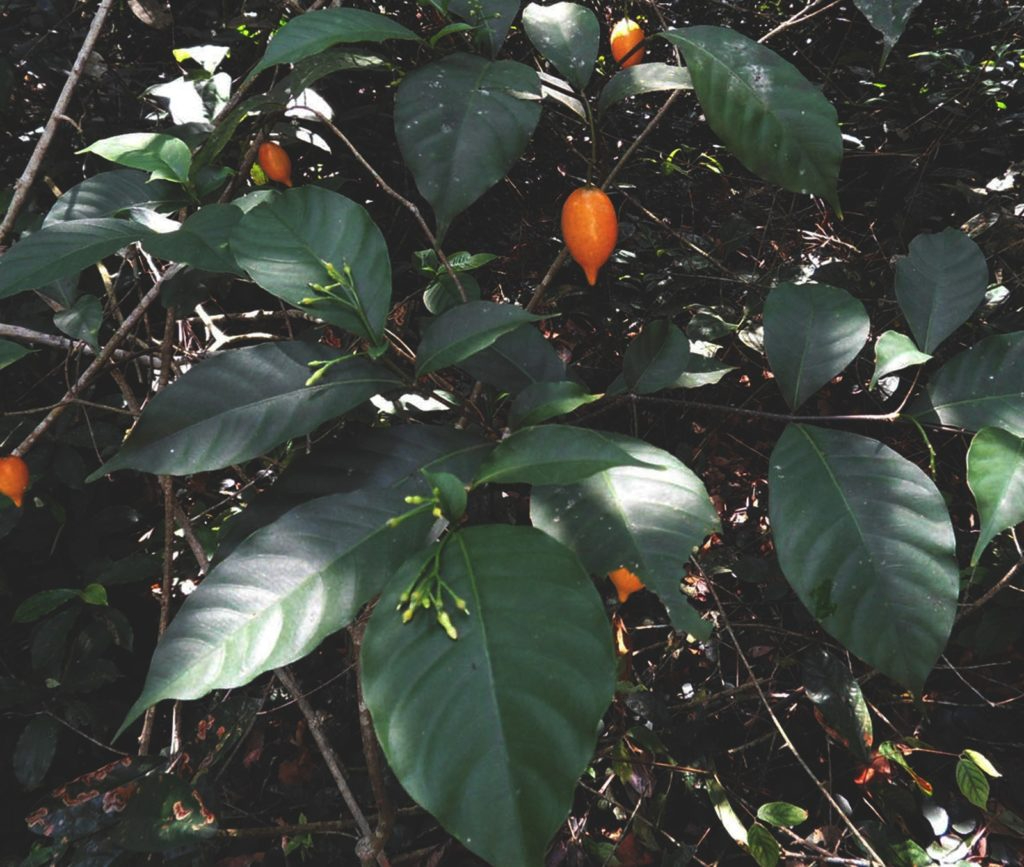
Iboga normally grows to a height of two metres, with small green leaves and flowers that are white and pink. The fruit is orange with an elongated, oval shape. Its yellow-coloured roots hold a number of indole alkaloids, and the active medicinal properties are found in their highest concentrations in the root bark.
An Iboga root spends about ten years in the earth before reaching harvestable maturity. The plants Iboga Journey works with are cared for on sacred land in the Congo and harvested traditionally. The outer, darker layer of the root is separated from the inner, lighter core. In Africa the core is processed into a paste, which also has medicinal value. The outer dried bark is highest in indole alkaloids, and that is what is sent to Iboga Journey.
Iboga Journey uses whole, dried Iboga root bark with no extractions. In Africa the medicine is also taken in its organic, natural form, and Iboga Journey’s ceremonies are held with deep respect for that tradition, using only ground root bark of the highest quality, sourced directly from the Congo. There is one trusted set of hands between harvest and shipping.
Raw root bark has no immediate onset. Because a much larger volume is needed than with an extract, it is offered slowly, round by round, over many hours. That slow pace lets providers notice individual sensitivities early and adjust amounts, and it creates the longest possible time in the depth of the journey.
The Iboga extracts TA (total alkaloid) and HCl (Ibogaine) have become the preference of drug detox centres because they can quickly interrupt withdrawal symptoms in people with severe dependency.
These extracted and concentrated alkaloids have their place, but they come with higher risk. The character of the medicine depends on the extractor, dosing is extremely sensitive, and medical supervision is needed.
Iboga Journey does not work with extracts and does not offer detox.
Guests come to the root bark for inner work, free of alcohol, drugs and medications.
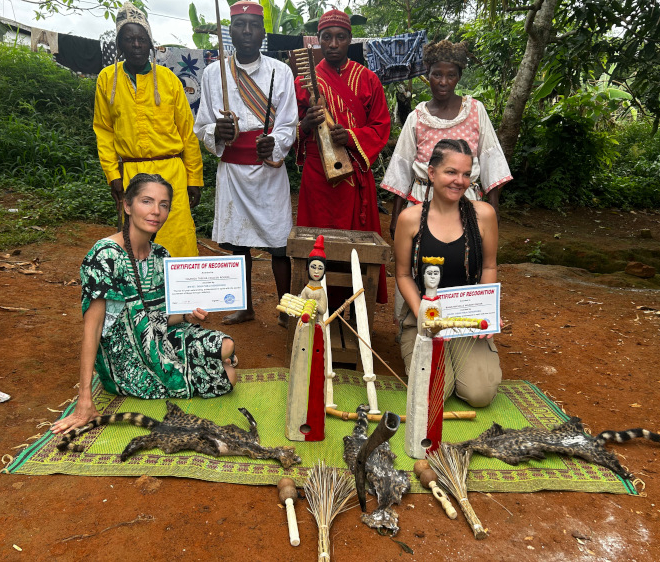
Iboga has been known to the forest peoples of the Congo Basin for thousands of years, and in the past few centuries it has played a central role in a spiritual path called Bwiti. Bwiti spans three countries in Central West Africa: Gabon, Cameroon and the Congo. It is not a religion and it is not a tribe. It is a remarkably truthful way of understanding life. Iboga is at its core and is used for initiation, rites of passage and self-exploration.
Bwiti has no written history, so no one knows exactly how long the practice has existed. The knowledge gained through Iboga is passed down through oral tradition. Stories tell of more than ten generations, and it may be far older.
Though this sacred medicine has its roots in Bwiti, its healing potential is for all humankind, regardless of origin. It is not necessary to be initiated to receive Iboga’s healing, but some feel called to go further and explore the core of the tradition in Africa. To become Bwiti, one must attend a full initiation there, and foreigners are welcomed. This miraculous healer has spread its energy, like its root system, all over our planet, and people dedicated to the pursuit of truth are able to do so with this master plant teacher.
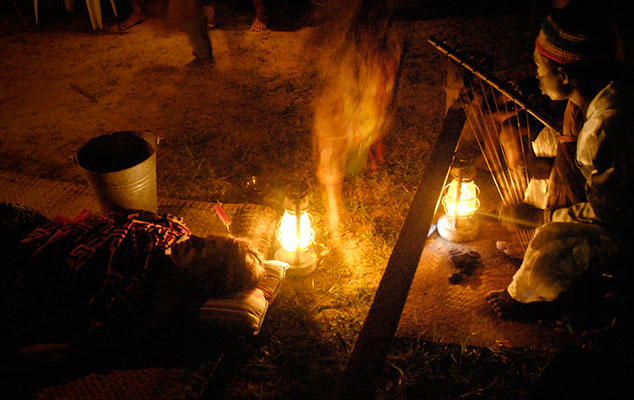
Iboga is more a warrior cleanse than a trip, resulting in the shedding of physical and emotional toxicity. Where some medicines take you outward, Iboga sends its root system inward, deep into every cell and down to the core. In a silent ceremony it keeps guests awake and in a deep meditative state for more than 24 hours.
Iboga has a unique ability to open an opportunity for change, and that opening does not close when the ceremony ends. Iboga Journey’s experience is that the window of clarity it creates lasts three months or more, which is why preparation beforehand and integration afterward matter as much as the ceremony itself.